
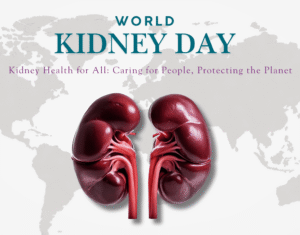
 Every year, World Kidney Day raises awareness about the importance of kidney health and the growing burden of kidney disease worldwide. The campaign, supported by the International Society of Nephrology (ISN) and global kidney foundations, emphasizes prevention, early detection, and better care for people with kidney disease.
Kidneys are often called the “silent workers” of the body because kidney disease can progress quietly without noticeable symptoms until significant damage has already occurred.
Why Kidney Health Matters
The kidneys perform several vital functions:
* Filter waste products and toxins from the blood
* Maintain fluid and electrolyte balance
* Regulate blood pressure
* Produce hormones that control red blood cell production
* Maintain bone health through vitamin D metabolism
When kidneys lose their function, waste products accumulate in the body, leading to chronic kidney disease (CKD) and potentially kidney failure requiring dialysis or transplantation.
The Silent Epidemic: Chronic Kidney Disease
Chronic kidney disease is defined as abnormal kidney structure or function present for at least 3 months and is classified based on glomerular filtration rate (GFR) and albuminuria levels
One of the major challenges in kidney disease is that most patients have no symptoms in the early stages, and many are diagnosed only when significant kidney damage has already occurred.
Major Risk Factors for Kidney Disease
According to nephrology guidelines, people at higher risk include:
* Diabetes mellitus
* Hypertension (high blood pressure)
* Cardiovascular disease
* Obesity
* Family history of kidney disease
* Long-term use of painkillers (NSAIDs)
* Recurrent kidney infections
* Smoking
Guidelines recommend screening high-risk individuals regularly, particularly those with diabetes or hypertension.
Simple Tests That Detect Kidney Disease Early
Kidney disease can be detected with simple, inexpensive tests:
1. Blood test – Serum Creatinine
Used to estimate eGFR (glomerular filtration rate), which measures kidney function.
2. Urine test – Albumin or protein
The presence of protein in urine is often the earliest sign of kidney damage.
KDIGO guidelines recommend regular screening in high-risk individuals, especially patients with diabetes.
7 Tips to Protect Your Kidneys
1. Control Blood Pressure
High blood pressure damages the small blood vessels in the kidneys and is one of the leading causes of kidney failure.
2. Control Blood Sugar
Poorly controlled diabetes is the most common cause of chronic kidney disease worldwide.
3. Reduce Salt Intake
Global kidney health campaigns recommend limiting salt intake to about 5–6 grams per day to protect blood pressure and kidney function.
4. Maintain a Healthy Weight
Regular exercise and weight control help reduce the risk of diabetes and hypertension.
5. Avoid Excess Painkillers
Frequent use of NSAIDs can damage kidney function over time.
6. Stay Hydrated
Adequate water intake helps maintain kidney filtration and prevents kidney stones.
7. Quit Smoking
Smoking worsens kidney disease progression and increases cardiovascular risk.
Warning Signs of Kidney Disease
Although early CKD is often silent, symptoms in later stages may include:
* Swelling of legs or face
* Fatigue and weakness
* Reduced urine output
* Foamy urine (protein in urine)
* High blood pressure
* Nausea or loss of appetite
If these symptoms appear, a medical evaluation is necessary.
Why Early Detection is Critical
Kidney disease often progresses slowly over the years. However, early detection allows interventions that can slow or even halt disease progression.
Newer treatment strategies recommended in guidelines include medications such as SGLT2 inhibitors, which have been shown to slow CKD progression in many patients.
Early treatment also helps prevent complications such as:
* Heart disease
* Kidney failure
* Dialysis dependence
World Kidney Day Message
This World Kidney Day, the key message is simple:
“Kidney disease is common, harmful, but treatable if detected early.”
By controlling risk factors, adopting a healthy lifestyle, and undergoing regular screening, we can significantly reduce the burden of kidney disease.
Meet Our Doctors – Ayra Health Care, Hyderabad
At Ayra Health Care, Manikonda, Hyderabad, we are committed to providing compassionate, high-quality medical care to individuals and their families. Our team of doctors brings years of expertise, advanced training, and a patient-first approach to ensure the best possible outcomes.
Dr. Anitha Adluri – MD, General Physician & Diabetologist
Dr. Anitha Adluri is one of the best general physicians in Hyderabad, with over 22 years of experience in Internal Medicine and Diabetology. She is highly regarded as a family-friendly physician and is recognised among the top physicians in Hyderabad. Her areas of expertise include fevers, infections, urinary tract infections, diabetes, thyroid disorders, hypertension, cholesterol problems, obesity, HIV, typhoid, dengue, pneumonia, asthma, allergies, vitamin deficiencies, immune system disorders, rheumatology conditions, and women’s health issues such as PCOD. Known as a top-rated doctor in Hyderabad, she focuses on accurate diagnosis, preventive care, and holistic treatment, ensuring long-term wellness for her patients. she is approachable and caring, making her a trusted physician for families across the city.
Ayra Health Care – Manikonda, Hyderabad
Dr. Anitha Adluri
General Physician & Diabetologist
For consultation or kidney health screening: 8500785430